The Practice
How letters become ritual
From Tool to Mark
Calligraphy is not merely the act of writing beautifully. It is a complete sensory experience—a meditation that engages hand, eye, breath, and intention. Our process honors this ancient practice while adapting it to contemporary life.
Preparation
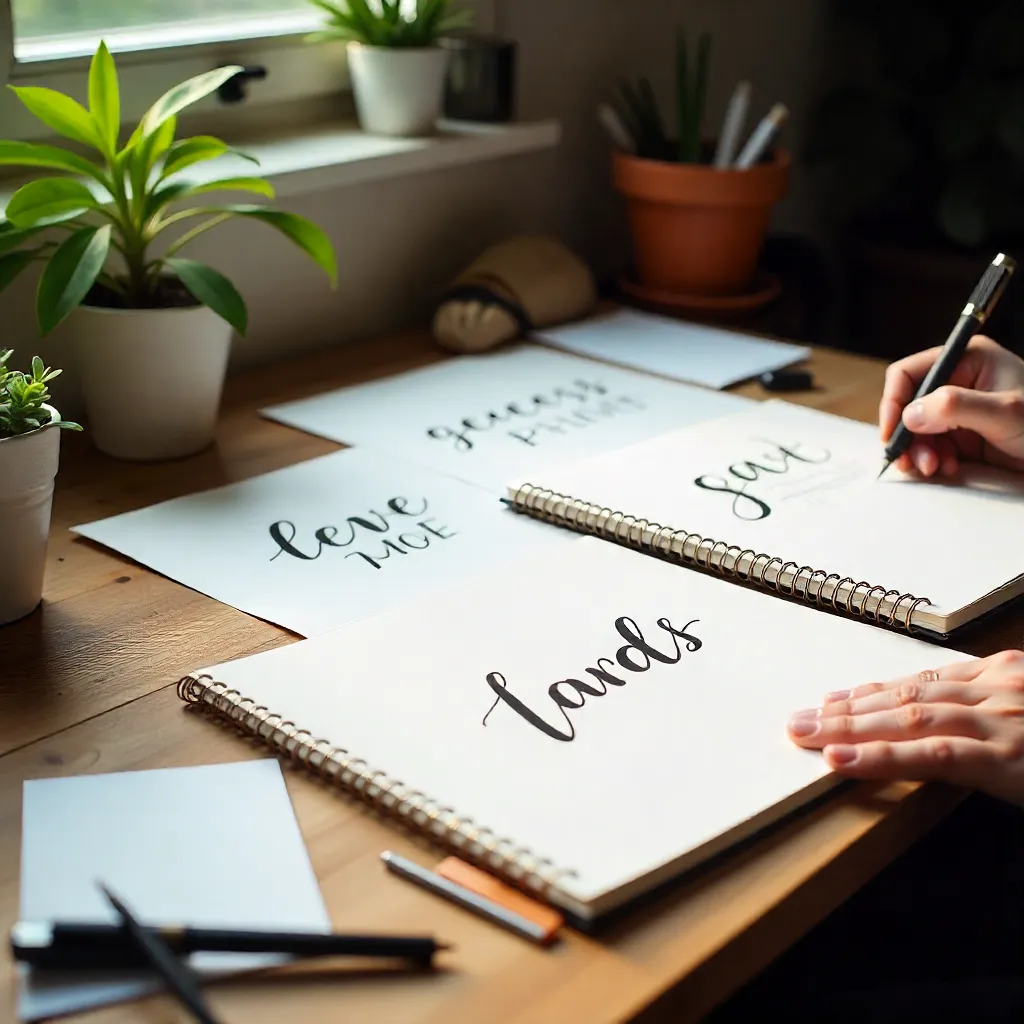
Before ink meets paper, there is ritual. We begin by clearing the workspace, gathering tools, and selecting materials. The nib is cleaned, the ink tested on scrap paper, the light adjusted to avoid glare.
This stage is about creating the conditions for focused work. It signals to the mind that something intentional is about to begin. In a commission context, preparation also means understanding the client's vision, researching references, and sketching preliminary layouts.
Breath
Calligraphy requires steadiness. Before making the first mark, we pause to notice the breath. Inhale, settle. Exhale, release tension from the shoulders and hand.
This is not mysticism—it's physiology. A tense grip creates shaky lines. Shallow breathing restricts fluid motion. By centering ourselves through breath, we create the physical conditions for graceful letterforms.
In workshops, this is often the moment students realize they've been holding their breath. Learning to breathe while writing transforms their work immediately.
Stroke
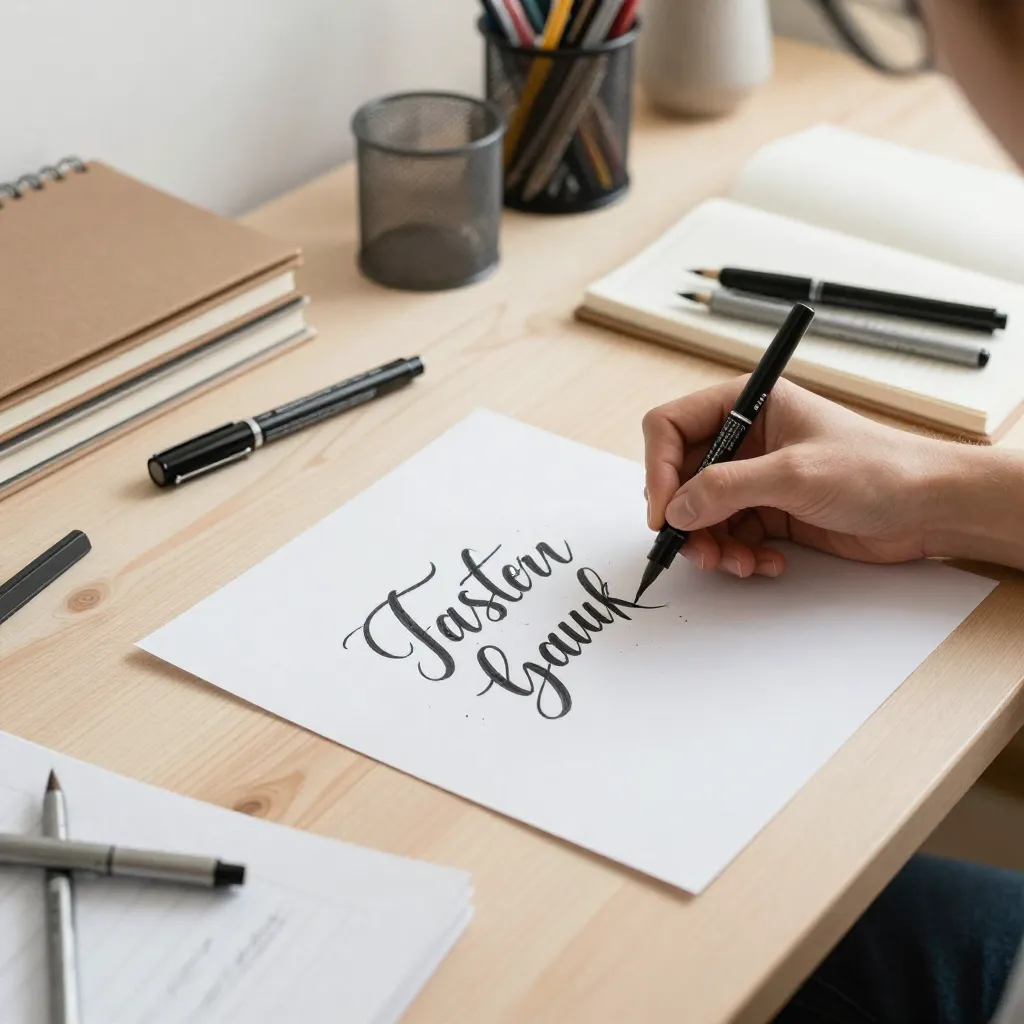
Now the nib touches paper. Pressure applied on the downstroke, released on the upstroke. The flexible tine spreads to create thick lines, springs closed for thin hairlines.
Each letter is built from fundamental strokes practiced hundreds of times. A lowercase 'a' is an oval plus an undercurve. An uppercase 'B' emerges from three compound curves and two connecting hairlines.
The rhythm becomes meditative: dip, stroke, lift. Dip, stroke, lift. Time slows. The world narrows to the movement of hand and the trail of ink.

Observation
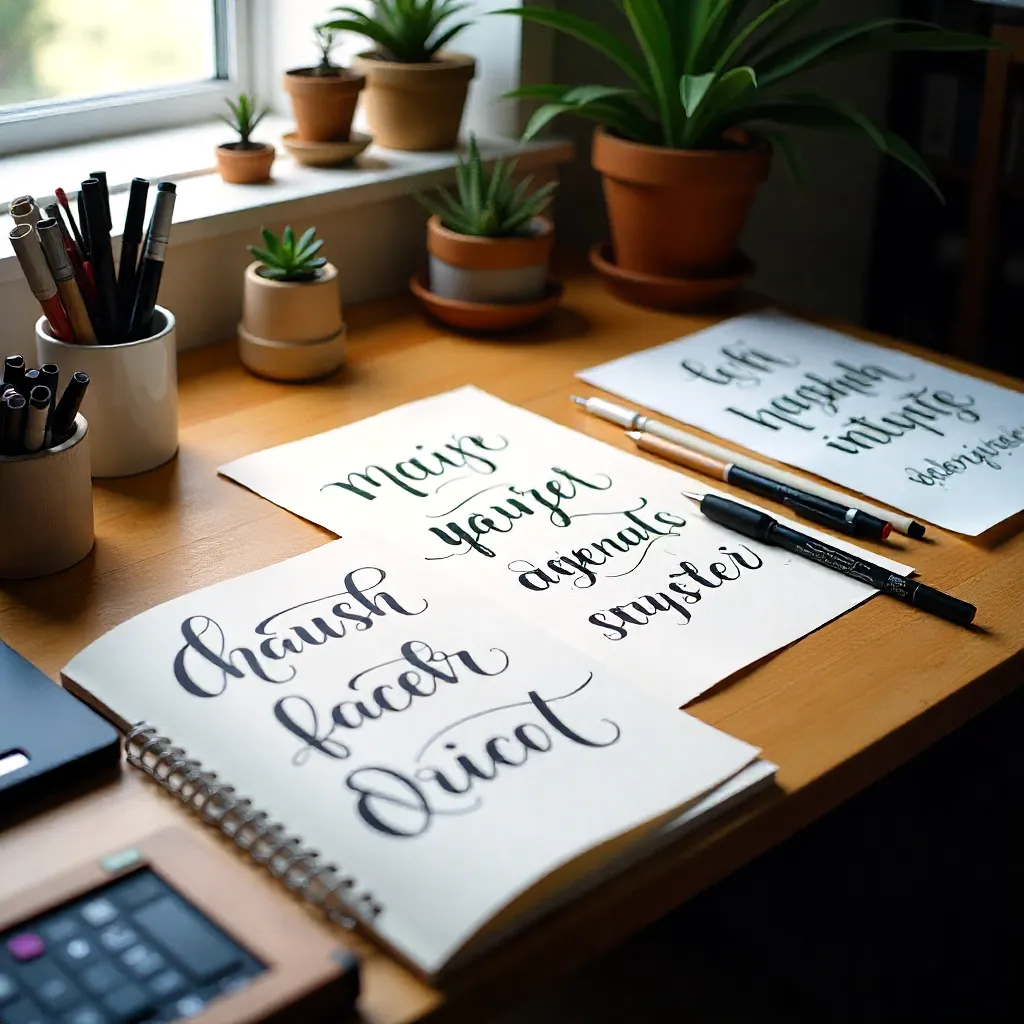
After completing a piece, we step back. Not to judge harshly, but to observe objectively. Are the letter heights consistent? Does the baseline wander? Is the spacing balanced?
This stage teaches discernment. We learn to see what's actually on the page, not what we intended to create. It's where the eye gets trained, where taste develops.
For client work, this often involves photographing pieces in natural light, reviewing on screen to catch subtle issues invisible to the tired eye.
Refinement
Based on observation, we make adjustments. Sometimes this means reworking a single letter. Other times, it requires starting fresh entirely.
There's wisdom in knowing when to persist and when to begin again. Paper is forgiving; it accepts our renewed attempts without complaint.
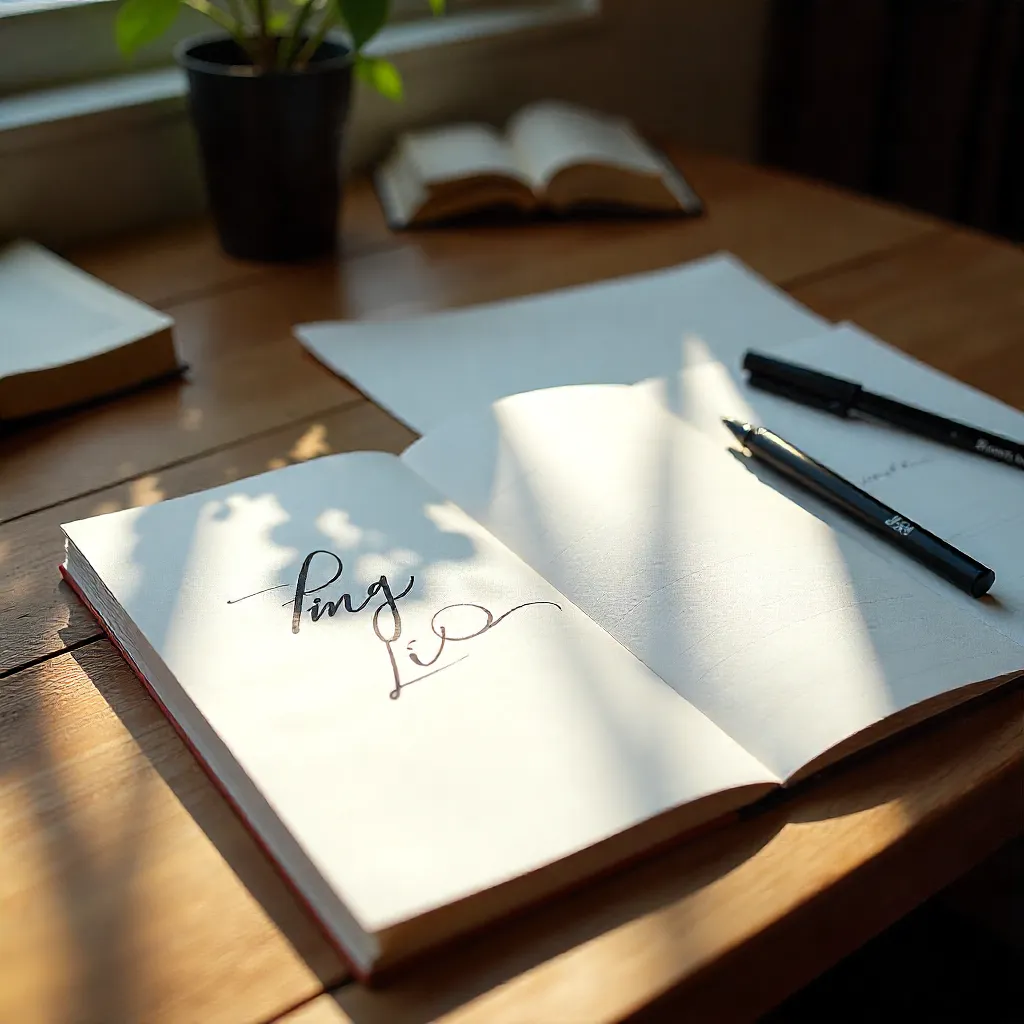
This iterative process—create, observe, refine—is where growth happens. Not in the first perfect attempt (which rarely exists), but in the willingness to try again with fresh eyes.
Completion
A piece is finished when it feels complete—when further adjustments would diminish rather than enhance. This requires trusting your instinct, which develops over time.
For commissions, completion includes careful packaging, documentation of the work, and sometimes digital reproduction for the client's records.
There's satisfaction in this stage, but also a gentle letting go. The piece no longer belongs to the process; it belongs to whoever will receive it.
Tools We Recommend
For those beginning their own practice, we suggest starting simple. A basic pointed pen holder, a few nibs, black ink, and smooth paper. That's all you need.
As your practice develops, you'll naturally discover preferences—perhaps you favor stiffer nibs for controlled scripts, or more flexible ones for dramatic swells. You might gravitate toward walnut ink for its organic warmth, or stick with dense black for maximum contrast.
The studio maintains relationships with several suppliers and is happy to offer guidance on sourcing materials. We also stock a small selection of tools and papers available for purchase during studio visits.
Philosophy & Practice
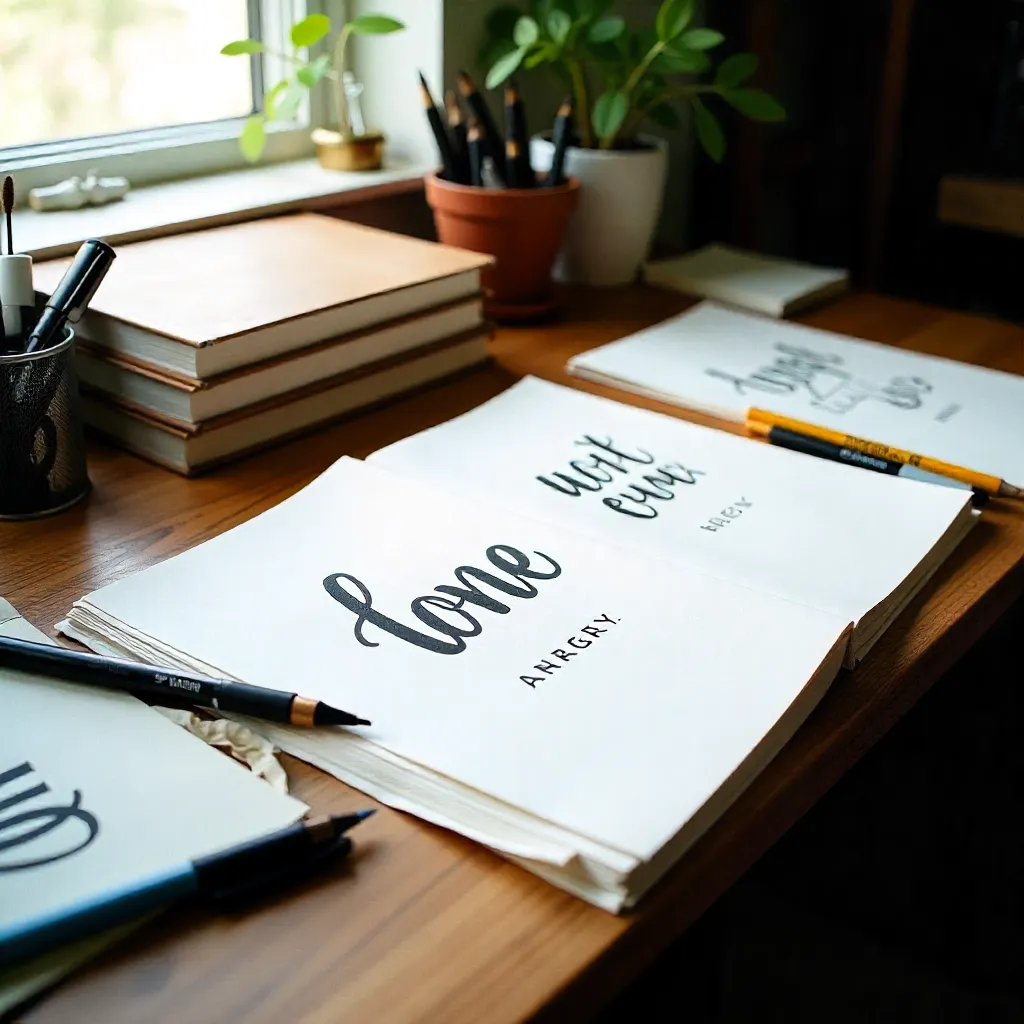
We believe in wabi-sabi—the beauty of imperfection. A slight wobble in a curve, the variation between two instances of the same letter, the way ink pools at the end of a stroke. These aren't flaws to be eliminated; they're evidence of the human hand.
In an age of digital fonts and mechanical precision, handmade work offers something irreplaceable: presence, intention, and the acceptance of our beautiful imperfection.
Whether you're interested in commissioning a piece created through this process, or learning to develop your own calligraphy practice, we'd welcome the conversation.